Paint Protection · 5 min read
PPF Or Ceramic Coating: Which Does Your Car Actually Need?
Paint protection film and ceramic coating solve different problems. Here is how they differ, where they overlap, and why combining them gives the most complete protection.
If you care how your paintwork looks, you have probably come across two popular options: paint protection film (PPF) and ceramic coating. Both keep paint looking newer for longer, but they work very differently.
What is paint protection film?
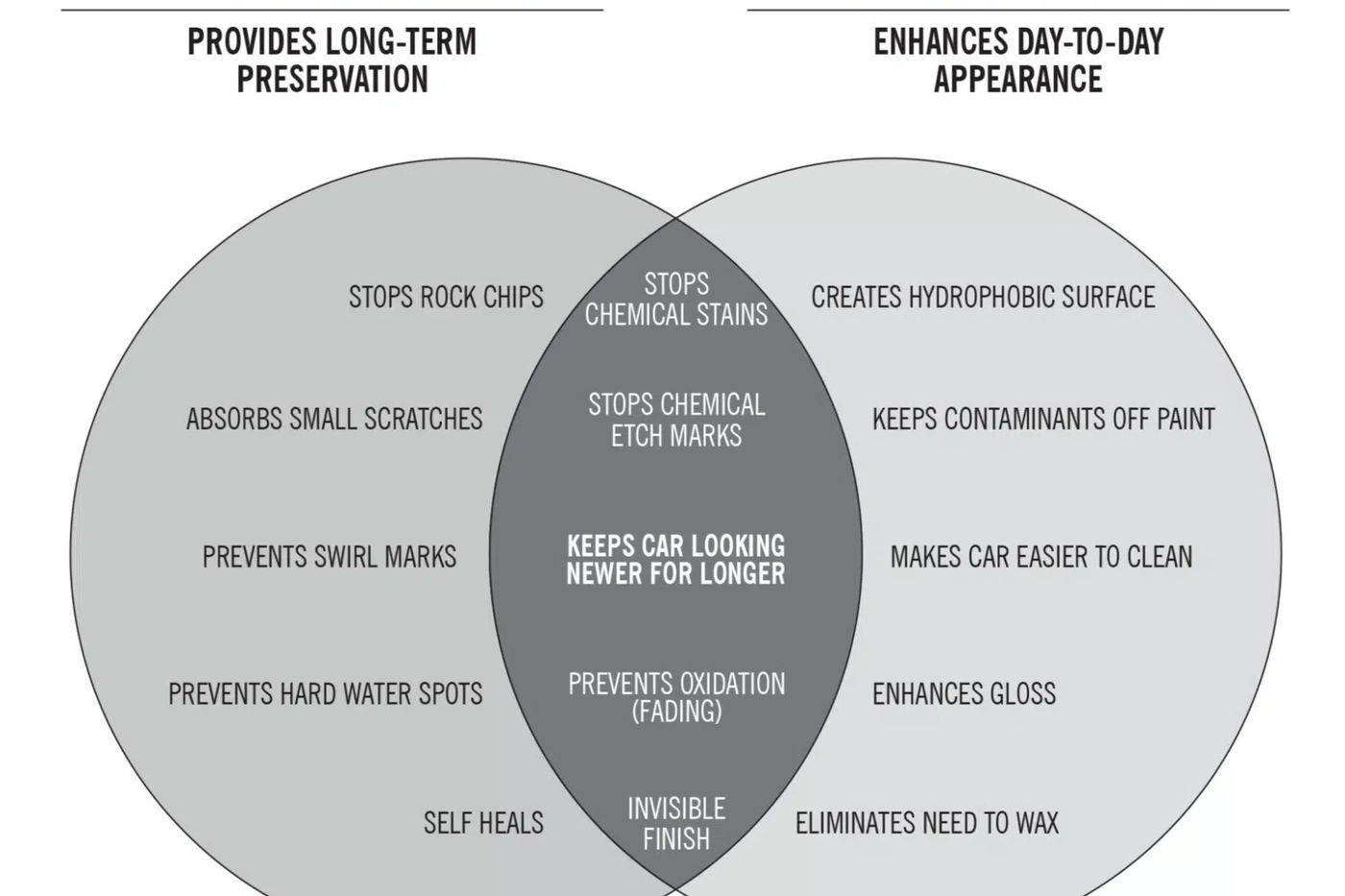
PPF is a transparent urethane film applied to your car's painted surfaces. It reduces the risk of:
- Chips and scratches from stones and road debris
- Swirl marks from washing
- Chemical stains and etch marks from acidic contaminants
- Hard water spots from mineral deposits
- Fading from UV exposure
What is ceramic coating?
Ceramic coating is a liquid polymer applied to exterior surfaces. It bonds chemically with the factory paint and creates a hydrophobic layer that keeps the car cleaner for longer, makes washing easier, and reduces chemical staining, etch marks and UV oxidation.
Where they overlap
Both share the same core goal — protecting and preserving paint — and both help resist UV damage and acidic contaminants. Either option adds value to your vehicle.
Where they differ
PPF is considerably thicker than coating and has a self-healing structure, so it can recover from small indentations and abrasions. That lets it absorb stone chips, minor scratches and swirl marks without permanent damage. Ceramic coating cannot do this. Despite bold marketing claims elsewhere, coating does not remove the risk of chips, scratches or swirl marks.
Coating's strength is its hydrophobic finish. Some PPF products include a hydrophobic top layer, but they rarely match a dedicated coating — and coating can be applied across the entire vehicle rather than only the panels the film covers.
So which is better?
You do not have to choose. Combining the two gives the most complete, invisible protection available.
PPF normally goes on first, over the most vulnerable areas: front bumper, bonnet, fenders, mirror backs and rear wheel arches. A coating then goes over the whole car, bonding to both the factory paint and the film. That adds a further barrier against chemical etching and staining, keeps the film cleaner, and lifts gloss across every panel.
Talk it through with us
If your goal is paintwork that stays sharp for years, a PPF and coating combination is usually the answer. Message us on WhatsApp with your car model and we will recommend the right coverage.